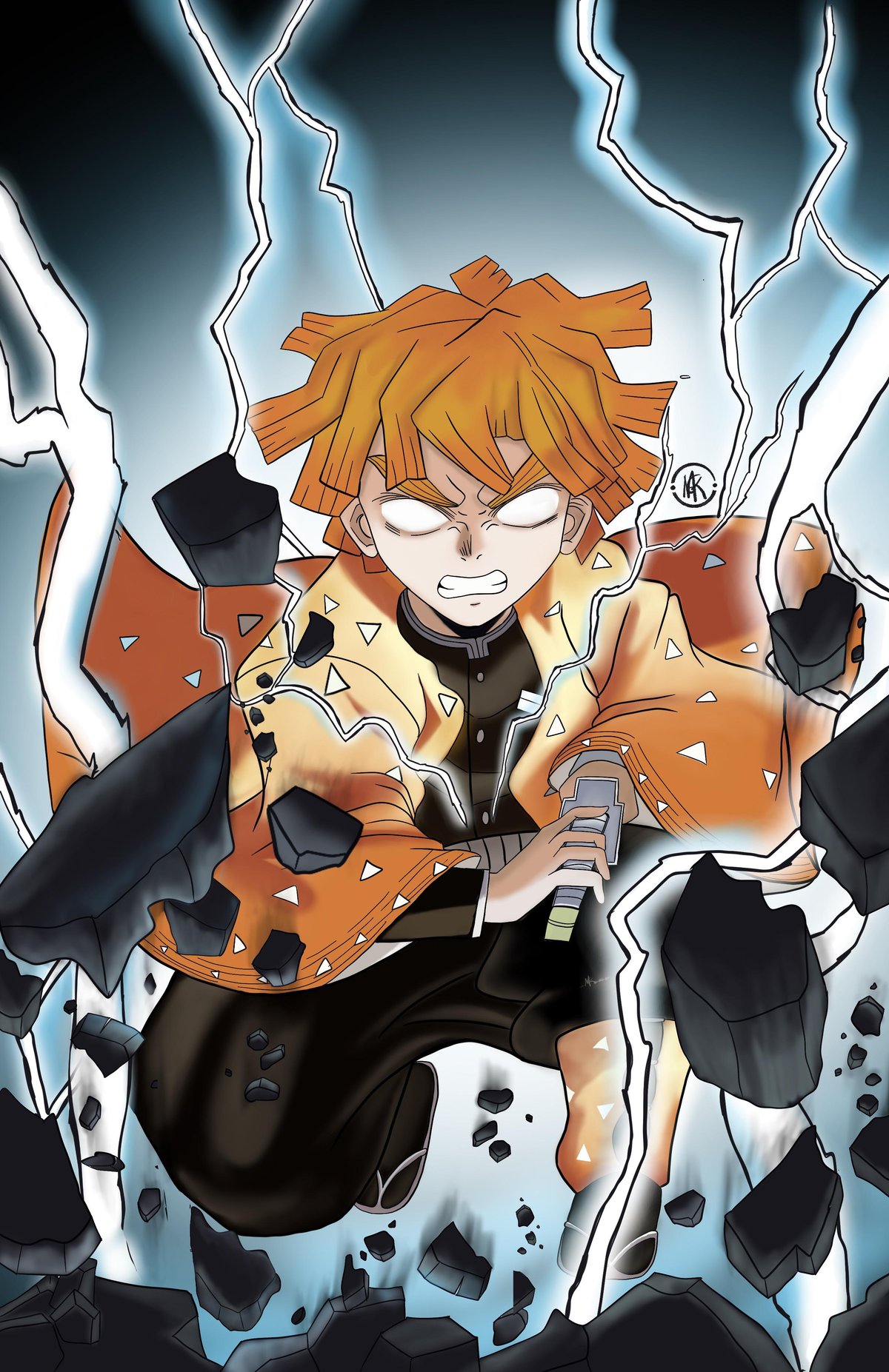
The world of anime is a vibrant tapestry, often weaving unexpected threads between beloved series. When whispers began to circulate about Zenitsu Agatsuma, the electrifying Demon Slayer, making an appearance in the dark, idol-centric drama Oshi no Ko, fans across the globe were understandably intrigued—and perhaps a little confused. How could a demon slayer, known for his thunderous breathing techniques, possibly fit into the cutthroat entertainment industry?
The truth behind the supposed "Zenitsu Agatsuma in Oshi no Ko" phenomenon isn't a straightforward crossover episode or a hidden character cameo. Instead, it's a testament to Oshi no Ko's brilliant meta-narrative and deep character exploration, drawing a thematic parallel that resonates profoundly with audiences. This flagship hub will guide you through the exciting connection, explaining exactly how Zenitsu's journey sheds light on the complex motivations of Oshi no Ko's protagonist, Aqua Hoshino.
Unpacking the "Cameo": Where Does Zenitsu Fit?
For those eagerly scouring Oshi no Ko for a glimpse of Zenitsu's distinctive yellow haori, rest assured: he doesn't physically appear. The "Zenitsu Agatsuma in Oshi no Ko explained" phenomenon stems from a clever narrative comparison rather than a literal crossover event. This connection primarily takes root within the manga's tenth story arc, "The End of the Play," which spans chapters 148 to 152. This crucial arc unfolds after the intense filming of the "15-Year Lie" film, delving into the intricate relationships between Aqua, Kana, and Akane.
As the characters gather by the beach, Akane voices her intent to watch over Aqua, hoping to steer him away from murdering Hikaru and towards a path of happiness. Amidst this emotional landscape, Kana confesses her love for Aqua to Akane, feeling Akane is a better fit for him. Akane, with her own ulterior motive to derail Aqua's revenge, offers to help Kana pursue a relationship with him. The arc culminates with Aqua confronting Hikaru Kamiki during the "15-Year Lie" film premiere, reaffirming his unwavering commitment to vengeance. To truly , it's vital to understand the nuanced storytelling that Oshi no Ko employs.
Aqua's Quest for Vengeance: A Parallel to Zenitsu's Transformation
The compelling link between Aqua and Zenitsu lies in their surprising character evolutions, particularly regarding their pursuit of vengeance and purpose. Zenitsu Agatsuma, initially introduced in Demon Slayer as a cowardly, often comedic relief character, stood apart from his fellow demon slayers whose motivations were often rooted in tragedy and a desire for revenge. His initial drive, as revealed in manga chapter 33 and anime season 1 episode 17, was simply to marry someday, having been coerced into training by Jigoro Kuwajima after being swindled.
However, Zenitsu undergoes a profound transformation. As depicted in manga chapter 136 and anime season 4 episode 7, the news of Kuwajima's death—a result of seppuku due to shame after another student, Kaigaku, became a demon—ignites a new, powerful purpose within him. This immense loss sparks a fierce desire for revenge, transforming him from a hesitant trainee into a determined and highly skilled swordsman set on avenging his master. This dramatic shift is where the thematic parallel with Aqua Hoshino becomes incredibly insightful, prompting us to .
The Weight of Expectations and Evolving Goals
Aqua's journey in Oshi no Ko is similarly defined by a complex interplay of purpose, grief, and the heavy weight of expectations. Following the tragic death of his beloved mother, Ai, Aqua is consumed by a relentless drive for revenge against her killer, Hikaru Kamiki. This single-minded focus dictates much of his actions and identity throughout the series. Yet, within "The End of the Play" arc, Aqua experiences a pivotal dream where he meets Gorou. Gorou expresses his happiness that Sarina (Ruby) achieved her dreams and reveals he no longer desires revenge, encouraging Aqua to pursue Kana. For a moment, it seems Aqua might find peace and move beyond his vengeful path.
However, this hopeful interlude is ultimately overshadowed. Despite Gorou's encouragement and a heartfelt date with Kana where he reveals plans to study medicine, Aqua's final confrontation with Hikaru confirms his unwavering resolve. He explicitly states he cannot move on until his revenge is achieved, echoing Zenitsu's absolute commitment after Kuwajima's death. Both characters are irrevocably shaped by loss, finding a profound, often dark, sense of purpose in seeking retribution.
Oshi no Ko's Meta-Narrative: Referencing and Reimagining Archetypes
Oshi no Ko's brilliance lies not just in its compelling plot but also in its sophisticated meta-commentary on the entertainment industry and its ability to draw rich parallels to wider cultural narratives. By implicitly linking Aqua's journey to Zenitsu's, the series subtly taps into established anime archetypes – the reluctant hero, the revenge-driven protagonist, the character transformed by loss – and reimagines them within its unique, grounded setting. This method allows Oshi no Ko to resonate on multiple levels, enriching the audience's understanding of its characters' internal struggles. It's a prime example of how the series manages to in unexpected ways.
The Concluding Act: Aqua's Final Choices
The arc concludes with Aqua's definitive stance against Hikaru. Despite the possibility of a happier, more peaceful future presented by Gorou's dream and Kana's affection, Aqua chooses to fully embrace his quest for vengeance. This unyielding resolve makes the Zenitsu comparison even more poignant. Like Zenitsu, who transformed his cowardice into determination born of revenge, Aqua's journey solidifies his identity around avenging his mother, even at the cost of his own happiness. For a thorough understanding of these culminating events, you'll want to .
Beyond the Hype: A Deeper Look at Storytelling
The "Zenitsu Agatsuma in Oshi no Ko explained" narrative might not be a literal crossover, but it serves a far richer purpose. It highlights Oshi no Ko's masterful ability to use thematic echoes from other popular series to deepen its own intricate character studies. By comparing Aqua's transformation and vengeful resolve to Zenitsu's, audiences are invited to ponder the universal themes of loss, purpose, and the powerful, sometimes destructive, nature of revenge. This nuanced approach to storytelling solidifies Oshi no Ko's place as a series that isn't afraid to draw inspiration and provoke thought, leaving a lasting impact long after the final chapter.